
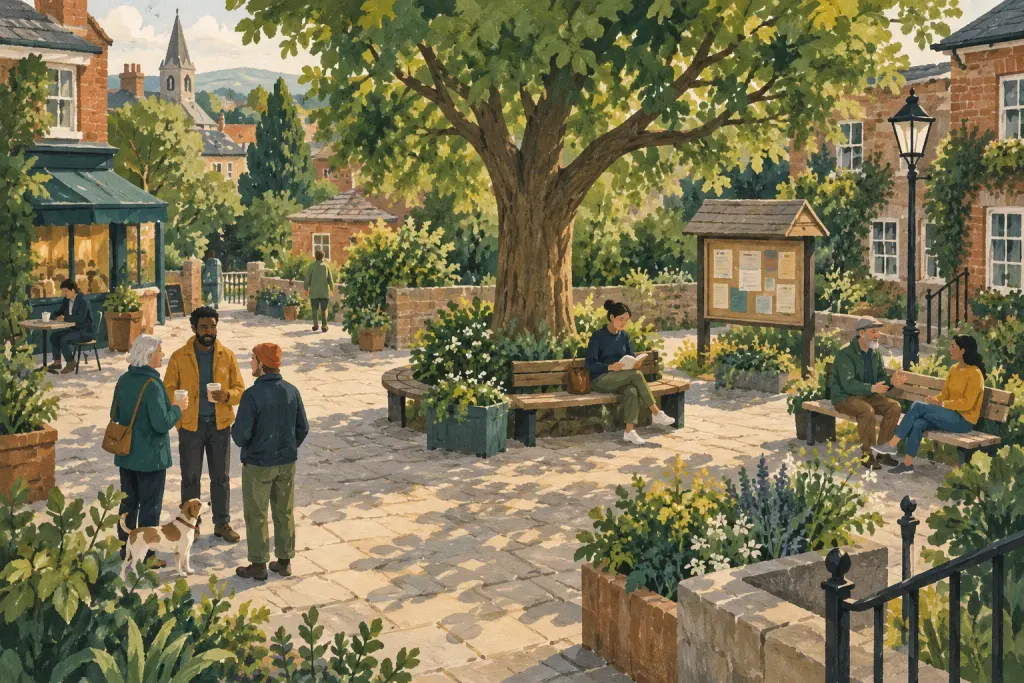
You can walk through a square a hundred times without wanting to stop. Then one day there is a chair in the shade, someone reading nearby, and enough room to sit without being in anyone’s way. The same place suddenly feels different.
A welcoming public space gives people reasons to stay and the freedom to decide how. Looking for those small invitations is a useful starting point when thinking about your own neighborhood.
Begin with the way in
Imagine arriving with someone who has never visited before. Is the entrance obvious? Can you see where the path goes? Is there a step or a narrow gap that you usually pass without noticing?
A route that works for you may be awkward for a wheelchair user, someone pushing a stroller, or a person carrying shopping. Observe the space, but ask people about their experience before deciding what they need. A photograph of an empty path cannot tell you how easy it feels to use.
Look for permission to pause
Seating changes the possibilities of a place. A bench next to a busy route offers a different experience from one facing a quieter garden. Some people want to watch the activity; others want a conversation without having to speak over it.
Notice whether stopping depends on buying something. A public seat, a readable notice board or a shaded edge can give someone a reason to be there without a transaction. These are useful questions to raise with whoever maintains the space, rather than reasons to move furniture or alter a site without permission.
Visit the same place twice
Try a short visit at another time of day. The sunny lunchtime seat might be uncomfortable later. A square that seems empty on a weekday morning might be the meeting point after school.
For a simple observation exercise, note three things:
- Where people pause. Record the location, without photographing or identifying individuals.
- What they can do there. Sit, read, wait for a friend, walk through or join an activity.
- One unanswered question. For example: who looks after the seating, and how can residents suggest a change?
This is an informal exercise, not a representative survey. A single visit should lead to better questions, not conclusions about everyone who uses a place.
Start a conversation before a project
Project for Public Spaces offers a useful framework for looking at public spaces, covering access, comfort, activities and sociability. It can help turn a vague feeling that a place is unwelcoming into something you can discuss.
You do not need a full redesign to begin that discussion. A clear request about one broken seat or a confusing entrance is easier to consider than a claim that the whole square needs fixing. Find out who is responsible, listen to other users, and leave room for a different view.
If you would rather contribute through an existing group, our guide to choosing a volunteer role offers a manageable next step.