
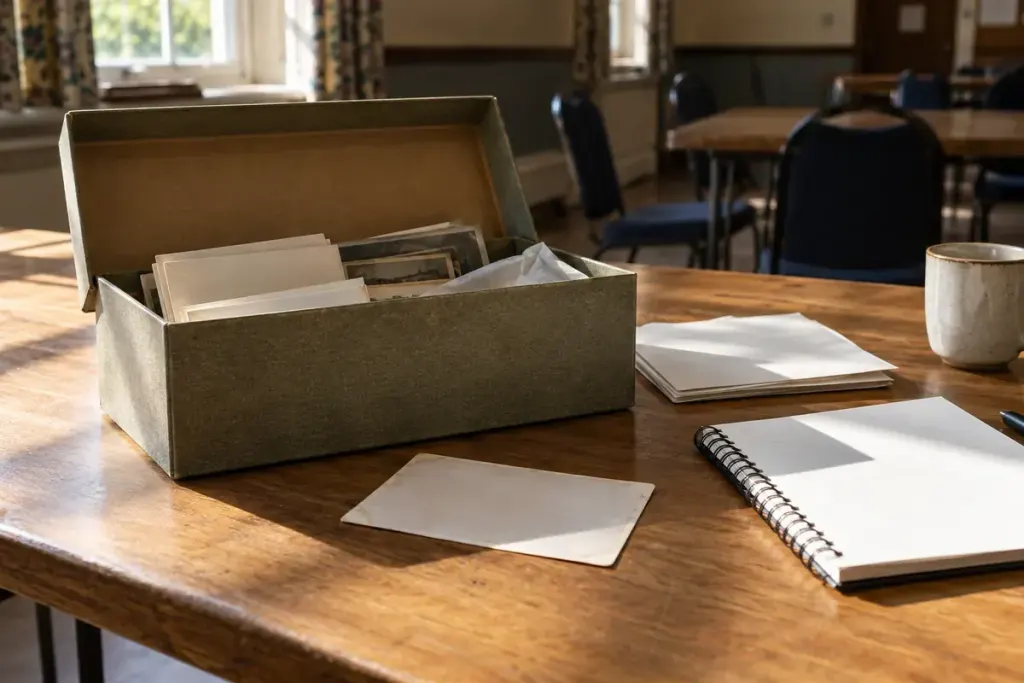
A community time capsule can become a mystery before anyone opens it. Who keeps the box? What did contributors agree could be shared? Does someone know when it should be opened? Answering those questions is part of the project, not an administrative task to leave until the celebration ends.
Choose the future audience
Decide whether the capsule is intended for a future school group, the same neighbourhood association or a public exhibition. Explain that audience when inviting contributions. A personal letter meant for a family member should not quietly become material for an unrestricted display.
Ask contributors to supply a short description, the date and their permission for the intended use. Avoid collecting unnecessary personal information. For contributions involving children, follow the organisation’s consent procedure and make participation optional.
Make the container understandable from the outside
Keep a separate inventory with the custodian’s role, the opening date and the location. Use a role that can pass to a successor, rather than relying on one volunteer’s memory. Agree what happens if the group closes or moves.
Prefer a supervised indoor storage plan over an improvised burial. Seek preservation advice before including fragile, damp or unusual materials; a sealed box does not make every object stable. Copies may be more appropriate than irreplaceable originals.
At the closing event, read the inventory together and give the next custodian a copy. The most useful object in the capsule may eventually be the simple note explaining why its contents mattered to the people who chose them.
AI-generated editorial illustration; not a documentary photograph.