
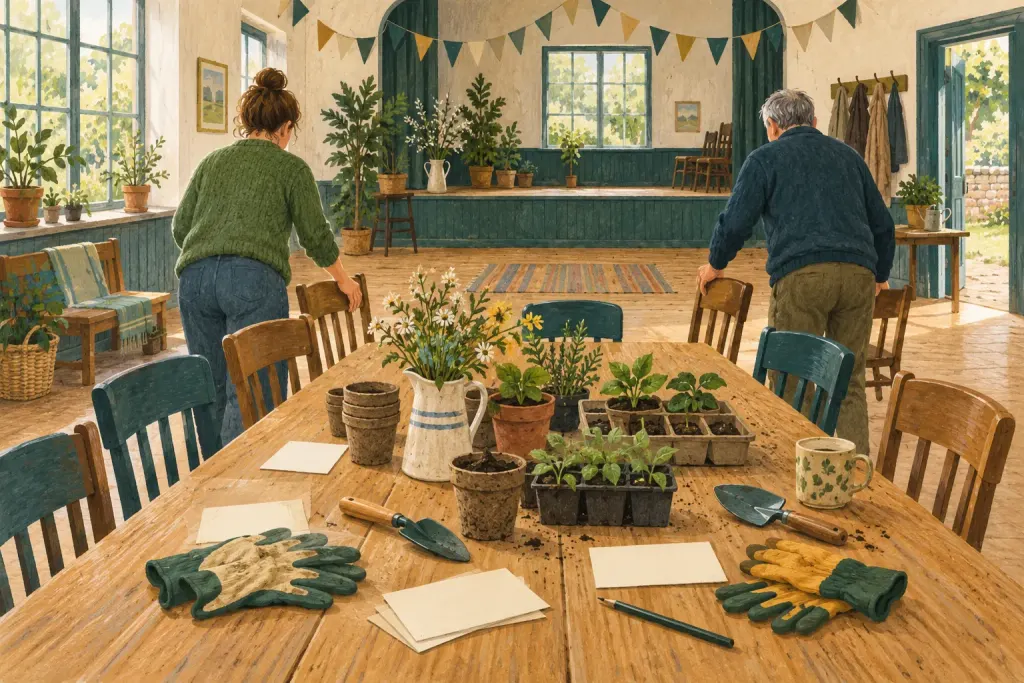
The end of an event often contains work that was missing from the plan: returning chairs, checking borrowed items, and leaving the room ready for its next use. If these jobs remain invisible, the last few people may inherit them without discussion.
List the real closing tasks
Walk through the space before the event and note what will need restoring. Use specific tasks such as “return six folding tables to the marked storage area,” rather than the broad instruction “tidy up.” Check handling requirements and leave unsuitable tasks to people equipped to do them.
Estimate the closing time honestly and include it when inviting volunteers. Someone who agreed to help until a stated time should not discover an additional hour of work at the end.
Offer clear, limited choices
Near closing, explain the remaining tasks and let people choose an appropriate role. Keep an option for lighter work. One coordinator can check the overall result without trying to perform every job personally.
Record anything that could not be completed and tell the responsible person promptly. Afterwards, adjust the task list based on what actually happened. A good closing routine makes the work visible, shares expectations early, and helps the next group inherit a usable space.