
A workshop leader says “do it like this” while moving something across a table. People at the back may hear every word and still miss the instruction. Describing the action aloud makes the demonstration easier to follow from more than one position.
The W3C guidance on accessible presentations recommends describing relevant visual information. For a community demonstration, that principle can become a small preparation task: identify which movements carry information that speech currently leaves out.
Rehearse one step using names and directions. Instead of “put this there,” try “place the empty container on the left side of the tray.” Use the actual labels participants will encounter. Avoid making colour the only way to distinguish two objects.
Let the description keep pace with the action
Say what is about to happen, perform the step, then pause long enough for a question. Do not narrate every incidental hand movement. The aim is to preserve the information needed to understand or participate, not to turn a simple activity into an uninterrupted commentary.
Ask a volunteer to follow from a different seat during the rehearsal. If they cannot identify the object being discussed, change the arrangement or the wording before adding more explanation.
Provide the essential steps in an accessible written form where possible, and invite participants to describe their access needs through the event’s contact route. One improved demonstration does not meet every need, but it reduces the amount of useful information available only to people with a clear view of the leader’s hands.
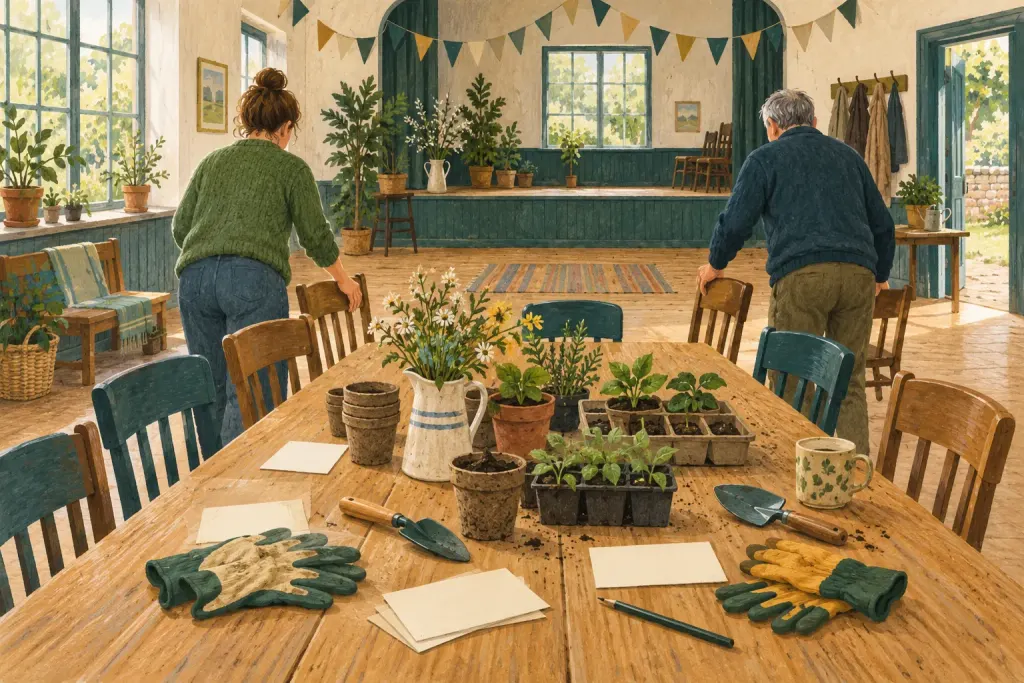
Visual note: the image illustrates the subject, not a documented event.